
The Church at prayer
The voice of the Church: Preparing for the new edition of the Liturgy of the Hours
The voice of the Church: Preparing for the new edition of the Liturgy of the Hours
Prior to the Second Vatican Council, most Catholics only knew the Liturgy of the Hours as the Divine Office, or the ritual prayerbook that clergy and some consecrated religious prayed. The council expanded this understanding by returning to the early Church’s practice of the hours being the prayer of the whole Church: clergy, religious and lay faithful.
Prior to the Second Vatican Council, most Catholics only knew the Liturgy of the Hours as the Divine Office, or the ritual prayerbook that clergy and some consecrated religious prayed. The council expanded this understanding by returning to the early Church’s practice of the hours being the prayer of the whole Church: clergy, religious and lay faithful.
The council’s Constitution on the Sacred Liturgy noted that Christ continues his priestly work through his Church. This includes all the baptized “interceding for the salvation of the whole world. The Church does this not only by celebrating the Eucharist, but also in other ways, especially by praying the Divine Office.” (CSL, 83)
Calling for the revision of the Divine Office, the council identified its purpose to sanctify the day. Therefore, the traditional sequence of the hours was to be restored. Those who prayed the office were encouraged to pray each hour at or near the time of day to which it was related. This included: the Office of Readings (Matins), Morning Prayer (Lauds), Midmorning Prayer (Terce), Midday Prayer (Sext), Midafternoon Prayer (None), Evening Prayer (Vespers) and Night Prayer (Compline).
The council hoped that the Divine Office would become a significant “source of devotion and nourishment for personal prayer,” (CSL, 90) precisely because it is the Church’s liturgical prayer. The bishops called upon all those who pray the Hours “to attune their minds to their voices when praying it.” (CSL, 90) In this way, their vocal prayer would move their hearts and souls to meditation and contemplative prayer, leading to encountering the Risen Christ in his paschal mystery. Without hesitation, the council declared: “The laity, too, are encouraged to recite the Divine Office either with the priests, or among themselves, or even individually.” (CSL, 99)
After all, “… the Divine Office is the voice of the Church, that is, of the whole Mystical Body publicly praising God.” (CSL, 99)
What to expect in the new Liturgy of the Hours
Based on the translation of the Vatican’s second Latin typical edition, the new edition will include four volumes of the office covering the complete liturgical year:
- Volume I — The seasons of Advent and Christmas.
- Volume II — The seasons of Lent and Easter.
- Volume III — Weeks 1-17 of Ordinary Time.
- Volume IV — Weeks 18-34 of Ordinary Time.
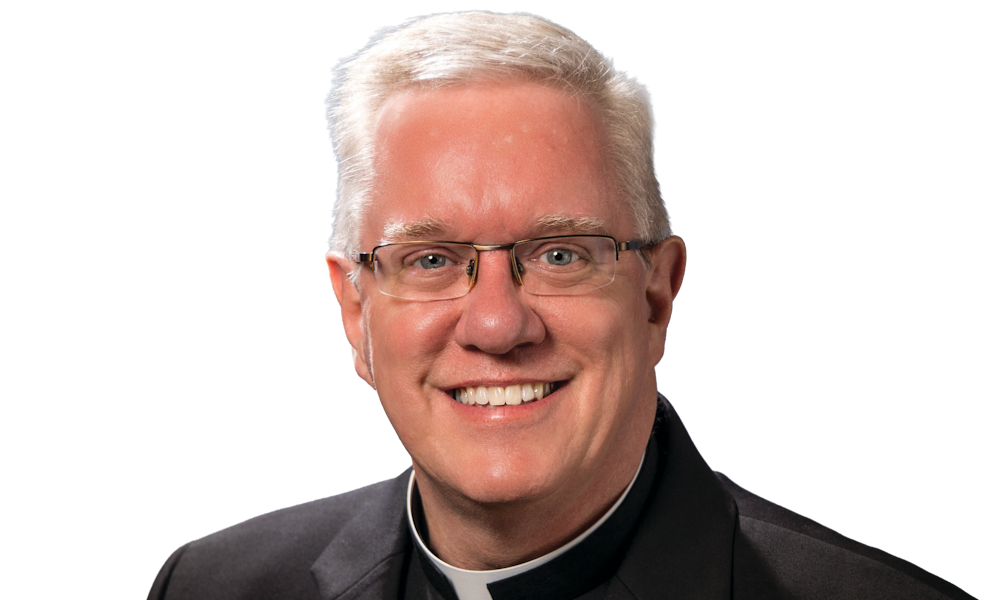
Bishop Michael Woost is auxiliary bishop of Cleveland and chairman of the United States Conference of Catholic Bishops’ Committee on Divine Worship, which studied and presented elements of the new edition of the Lectionary for Mass and the 2025 Roman Missal-Liturgy of the Hours Supplement for the bishops’ approval at the spring plenary meeting in June.