A mission of mercy
Prison ministry meets people where they are, offers hope
Prison ministry meets people where they are, offers hope
People in prison are still people, made in the image and likeness of God. No matter what someone has done, they deserve the opportunity to hear the Word of God and find the truth of the message of Christ.” That statement from the United States Conference of Catholic Bishops lays the foundation for prison ministry, including here in the Catholic Diocese of Cleveland.
People in prison are still people, made in the image and likeness of God. No matter what someone has done, they deserve the opportunity to hear the Word of God and find the truth of the message of Christ.” That statement from the United States Conference of Catholic Bishops lays the foundation for prison ministry, including here in the Catholic Diocese of Cleveland.
Visiting the imprisoned is one of the corporal works of mercy, as outlined in Matthew 25:35-40. These works of mercy offer guidance for the treatment of others — as if they were Christ in disguise, according to the United States Catholic Catechism for Adults. They are charitable actions by which we help our neighbors in their bodily needs and they respond to the basic needs of humanity as we journey together through life, according to the U.S. Catechism.
Priests, deacons, religious sisters and countless lay volunteers are the backbone of prison ministry in the Cleveland Diocese. They serve at local and county jails, juvenile detention centers and state institutions and reintegration (pre-release) centers across the eight-county diocese.
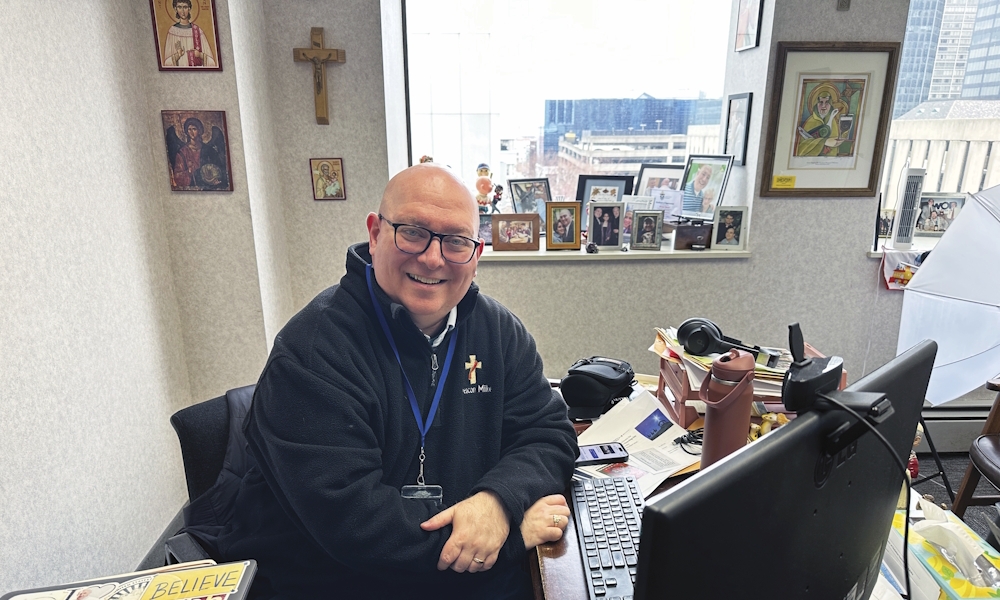
There has been a prison ministry in the diocese for many years, but it became more cohesive about 30 years ago, thanks to the efforts of the late Auxiliary Bishop A. James Quinn, said Deacon Mike Hayes, diocesan director of chaplaincy services. Deacon Mike was appointed by Bishop Edward Malesic in June 2025 to oversee the chaplains and ministry in prisons, hospitals and nursing homes.
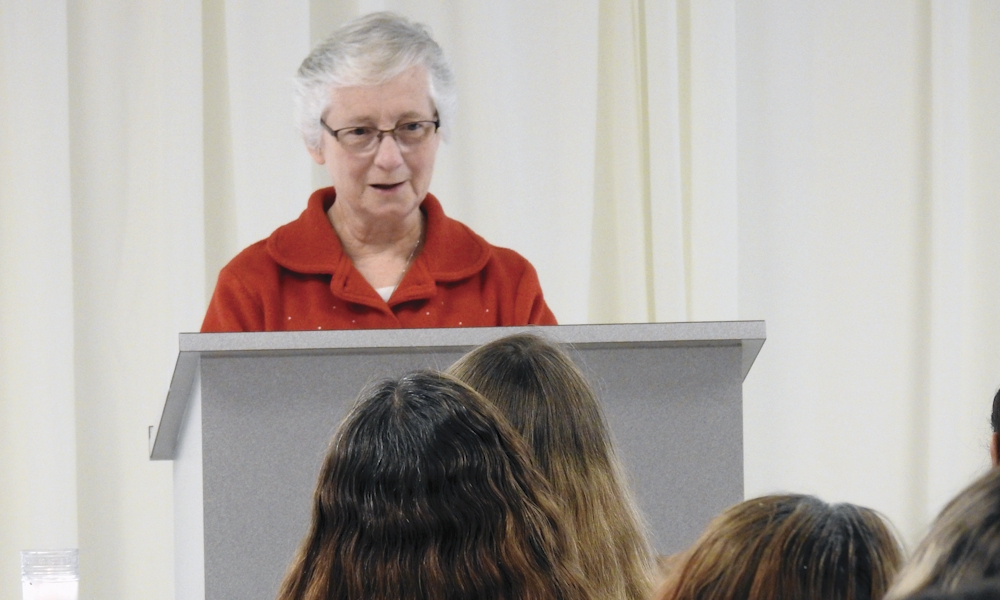
Sister Rita Mary Harwood, SND, who retired in August 2021 after more than 25 years as head of the diocesan Parish Life and Development Secretariat, worked closely with Bishop Quinn to formally establish the diocesan prison ministry. She said the bishop was passionate about wanting the ministry to have a structure that would ensure continuity and respond to the needs of the incarcerated and their families.
Together they formed a committee with representatives from the corrections community, the formerly incarcerated, recent ministry volunteers and representatives from diocesan offices to build a ministry plan. They took their work seriously, and prepared an outline for a plan, which was adopted and continues to provide direction for the ministry.
In addition to chaplains appointed by Bishop Malesic to serve in the state institutions, the prison ministry includes priests, deacons and lay volunteers from parishes across the diocese. Local correctional facilities are served by nearby parishes.
Among the facilities served are Northeast Reintegration Center, Cleveland; Grafton Correctional Institution, Grafton; Grafton Reintegration Center, Grafton; Cuyahoga County Jail, Cleveland; Cuyahoga County Juvenile Detention Center, Cleveland; Cuyahoga Hills Juvenile Correction Facility, Highland Hills; Geauga County Jail, Chardon; Lake County Jail, Painesville; Lorain Correctional Institution, Grafton; Lorain County Jail, Elyria; Medina County Jail, Medina; and Wayne County Jail, Wooster.
Jails generally are short-term facilities for those awaiting trial or serving sentences of less than one year. Prisons are state- or federally operated institutions that house convicted felons serving sentences of more than a year.
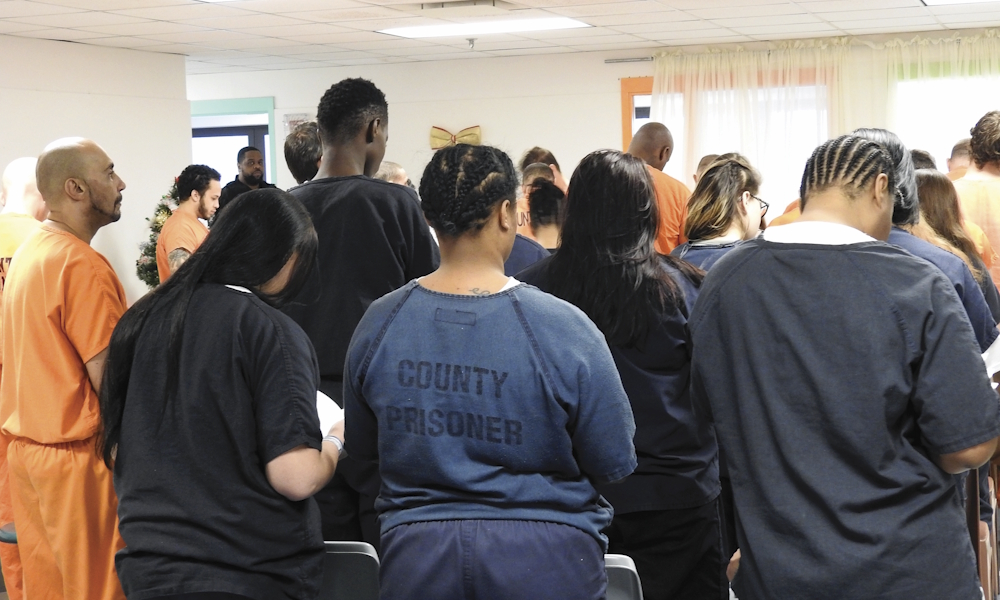
Deacon Mike said chaplains assigned to specific facilities visit at least weekly. The priests celebrate Mass and provide sacraments for the incarcerated residents.
“The incarcerated consider the jail (or prison) as their parish,” he said. “For example, the women at Northeast Reintegration Center look on Father Dave Domanski, OFM Cap, the assigned chaplain, as their pastor.”
Deacon Mike said meeting the incarcerated residents where they are in life and walking with them is an important part of the ministry.
“There is a sense of order in incarceration, which some of the residents admit they need,” he said, mentioning one woman who told him she was thankful for the structure. “She said it helped her deal with her addictions, to kick them and it led her to Jesus Christ. When I heard that, I said, ‘Wow!’ I was surprised.”
It’s easy to become depressed during incarceration, so those in the prison ministry try to help support the residents and their families, especially during the holiday season.
Deacon Mike recalled visiting one facility recently and learning that the father of an incarcerated resident had died. During a prayer service, he sang the Irish Blessing, which the man later told him was comforting because his father used to pray the Irish Blessing with him.
“The warden at Grafton Correctional said the work done by our ministry has helped change the culture at the prison,” Deacon Mike said. Grafton corrections officers are like coaches for the residents as they help the men with rehabilitation, he explained.
Sister Rita Mary said Grafton residents wanted to help the community and have been working with Catholic Charities, Diocese of Cleveland for several years to fill needs in the diocese. For example, during the coronavirus pandemic, the men sewed thousands of face masks that were distributed by Catholic Charities and used by school children and others. Today, they provide wheelchair and walker bags for the residents at St. Augustine Towers as well as duffel bags, winter blankets, hats and gloves for the homeless.
She also mentioned the garden at Grafton, which has expanded over the past few years. The men grow a variety of vegetables — nearly 20,000 pounds in 2025 — that are given to Catholic Charities to supplement local food banks and hunger centers. The men have been recognized for their efforts.
Deacon Mike noted the prison ministry also works with young people in the juvenile justice system. Father Gary Chmura has visited the Cuyahoga County Juvenile Detention Center regularly for many years, and Sister Milka Wachera, ESM often accompanies him.
In addition to trained prison ministry volunteers, Sister Rita Mary said another group writes letters to incarcerated residents. In 2013, the ministry also formed support groups known as LEAF — Listening, Encouraging, Assisting Families of the incarcerated — to accompany loved ones who had a family member incarcerated. Eight groups met at different parishes before being suspended by the coronavirus pandemic. Three LEAF ministry groups still gather and sister said they are hoping to establish more in the near future.
On Ash Wednesday, Sister Rita Mary was helping to distribute ashes at the Cuyahoga County Jail and Justice Center when she met a woman who was waiting for her son. He’d been struggling with substance abuse his entire adult life, going in and out of incarceration.
“It has been very stressful for her,” sister said.
The woman told her a friend, who also had an incarcerated family member, invited her to attend a LEAF meeting about six years ago. “She said it was the only time she felt any peace.” The woman recognized sister from LEAF.
Sister Rita Mary said she knows Deacon Mike will infuse new energy and ideas into the prison ministry.
“He’s a very good person for the job. He really cares and I’m glad to be helping him.”
Prison ministry overview
Contracted prison ministry chaplains appointed by the bishop are Father Edward Holland, Grafton Reintegration Center; Father Dave Domanski, OFM Cap, Northeast Reintegration Center; Father David Trask, Lorain Correctional Institution; Father Neil Walters, Grafton Correctional Institution.
Father Gary Chmura volunteers at Cuyahoga County Juvenile Detention Center, along with Sister Milka Wachera, ESM. Deacon John Travis also is a prison ministry volunteer.
In addition to the contracted chaplains, several parishes in the diocese are involved with prison ministry at nearby jails and correctional facilities.
The new Lorain County jail ministry, conducted by volunteers from various western parishes, is the first jail ministry supported by the Society of St. Vincent de Paul – Cleveland. (See story on page 10.)
Religious sisters have also played a role in mentoring and assisting incarcerated women throughout the diocese.
Learn more
To volunteer or learn more about prison ministry, contact Deacon Mike Hayes, [email protected].